
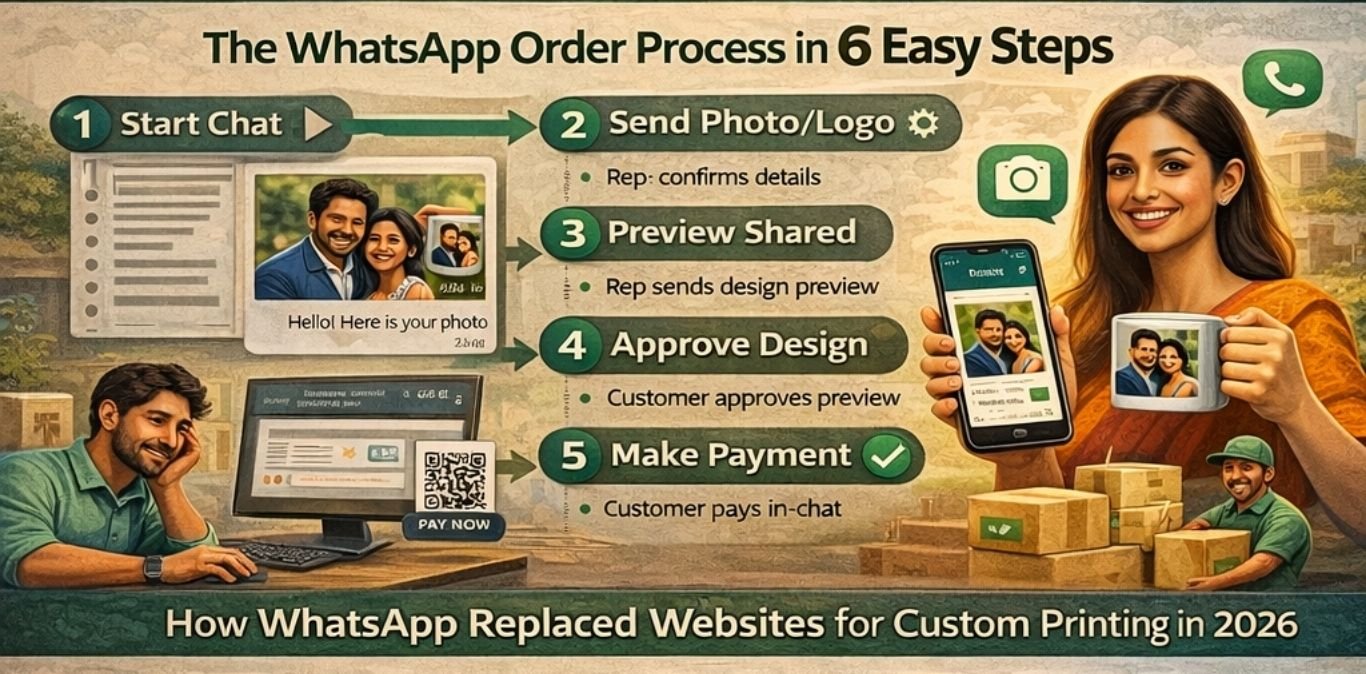
How WhatsApp Replaced Websites for Custom Printing in 2026
Recap of Part 2:
In Part 2, we discussed why customers in 2026 prefer WhatsApp over traditional websites. From instant replies and seamless payments to mobile convenience and personal support, WhatsApp provides a fast, human-centered, and frictionless shopping experience.
💡 Reader Note: If you haven’t read Part 2 yet, we highly recommend reading it first to understand why conversational commerce is surpassing websites in India. Read Part 2 here
The Problem with Websites for Custom Printing
Custom printing businesses like MPrintz have unique challenges:
- Every order is personalized
- Customers need to share logos, photos, or designs
- Approvals and feedback are crucial
- Bulk and corporate orders require collaboration
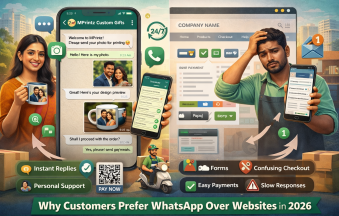
Traditional e-commerce websites are designed for fixed products, not highly personalized orders. They often frustrate customers with:
- Long forms for product customization
- Complicated checkout steps
- Slow responses to queries
- Difficulty in sharing photos or logos
By 2026, customers started demanding a more interactive and instant method to place orders, which websites could not provide efficiently.
Why WhatsApp Became the Perfect Replacement
WhatsApp solved these problems and became the preferred platform for custom printing because it allows:
- Real-Time Communication
Customers can chat directly with representatives, explain their requirements, and get instant feedback. This eliminates the back-and-forth emails or delayed responses common on websites. - Easy Photo and Logo Sharing
Sending a photo or logo on WhatsApp is simple. Customers can even annotate or add instructions using emojis or voice notes. - Instant Design Previews
MPrintz can share digital previews immediately. Customers can approve changes on the spot without waiting for email replies. - Seamless Payments
WhatsApp supports in-chat payments. Customers complete their purchase in one click, avoiding website errors or abandoned carts. - Collaboration for Bulk Orders
Corporate clients can discuss and approve orders in a single group chat, making large orders more manageable than on complex websites. - Trust and Personal Support
A human representative answering questions builds confidence, reducing hesitation to buy. Websites cannot provide the same level of personal touch.
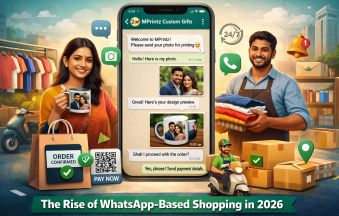
A Typical WhatsApp-Based Custom Printing Order
Here’s how a customer experience works in 2026:
- Customer sends a photo/logo to MPrintz on WhatsApp.
- Representative replies instantly, confirming requirements.
- MPrintz shares a digital preview of the product.
- Customer approves the design in-chat.
- Customer makes payment directly through WhatsApp.
- Order is processed and tracked, with updates sent instantly.
This entire process, which can take hours or days on a website, now happens within minutes on WhatsApp.
The Impact on Businesses
For custom printing businesses:
- Conversion rates increased because customers complete orders faster
- Customer satisfaction improved due to instant support and previews
- Repeat orders grew as buyers felt connected and valued
- Bulk and corporate orders became easier to manage
At MPrintz, adopting WhatsApp as a primary sales channel allowed the company to serve more clients efficiently while reducing overhead costs for website management and support teams.
Conclusion
By 2026, WhatsApp has replaced websites for many custom printing businesses because it aligns with modern customer expectations: fast, interactive, personal, and convenient.
Websites still have a role — they can display products and act as a reference point — but the actual ordering process for personalized products has moved to WhatsApp, where conversations drive sales.
💡 Reader Note: If you haven’t read Part 1 and Part 2 yet, we recommend catching up to fully understand the shift from traditional websites to WhatsApp-based commerce.










Add comment